
Michael Leube
Design Antrhopologist

I am interested in all things human. I was born in Austria but grew up in the San Francisco Bay Area. I received a B.A. from the University of California at Berkeley (Anthropology and Comparative Religion) in 1994. After returning to Europe, I received a M.A. from the University of Vienna (Anthropology and Human Biology) in 1999 and a Ph.D. from the University of Zagreb (Anthropology) in 2003. I am fluent in German, English and Spanish.
Currently, I research and teach on the interface between anthropology and design with a constant focus on pro-sociality and sustainability. By providing expansive knowledge of evolutionary science and design research, rather than ideology, i can help transform your businesses into ambassadors of a regenerative future. Through my training as facilitator of design thinking at Stanford’s d.school and design for prosocicality at prosocial.world, i will help your business be real change.
Michael Leube
Design Antrhopologist
I am interested in all things human. I was born in Austria but grew up in the San Francisco Bay Area. I received a B.A. from the University of California at Berkeley (Anthropology and Comparative Religion) in 1994. After returning to Europe, I received a M.A. from the University of Vienna (Anthropology and Human Biology) in 1999 and a Ph.D. from the University of Zagreb (Anthropology) in 2003. I am fluent in German, English and Spanish.
Currently, I research and teach on the interface between anthropology and design with a constant focus on pro-sociality and sustainability. By providing expansive knowledge of evolutionary science and design research, rather than ideology, i can help transform your businesses into ambassadors of a regenerative future. Through my training as facilitator of design thinking at Stanford’s d.school and design for prosocicality at prosocial.world, i will help your business be real change.

Michael Leube, Ph.D.
Design Anthropologist


University of California at Berkeley
B.A. Cultural Anthropology (Minor: Comparative Religious Studies)
1991-1994
University of California at Berkeley
M.A. Cultural Anthropology (Minor: Biological Anthropology)
1995-1999

University of Zagreb
Ph.D. Anthropology
Thesis: “Culture and Evolution: Comparison of British Social Anthropology, American Cultural Anthropology and Vienna’s Kulturkreislehre”.
1999-2003
Michael Leube, Ph.D.
Design Anthropologist
University of California at Berkeley
B.A. Cultural Anthropology (Minor: Comparative Religious Studies)
1991-1994
University of California at Berkeley
M.A. Cultural Anthropology (Minor: Biological Anthropology)
1995-1999
University of Zagreb
Ph.D. Anthropology
Thesis: “Culture and Evolution: Comparison of British Social Anthropology, American Cultural Anthropology and Vienna’s Kulturkreislehre”.
1999-2003

Theory

Teaching
I teach university courses on cultural and biological anthropology, design anthropology, ethnography, and user-centered design. I give key-note speeches at events and conferences and provide consultancy for the private sector.

Content
Read about all things concerning design, anthropology and sustainability in my published articles and my blog. On my podcasts you can listen to interviews with experts on such topics as the Circular Economy, Pro-Social Behavior and Biophilic design.

Research

Ethnography
I study how people use design in their everyday lives. How do people interact with the objects, spaces, and technology around them? Through ethnographic research I provide insights on the subtleties of human behavior in different context.

Cultural Probes
Cultural Probes can use simple diaries, single-use camera, or digital applications.

UX/ UI Testing
Their roles are quite different and refer to very different aspects of the product development process, but user experience design (UX) and user interface design (UI) are both crucial to products and services. Testing them is a qualitative undertaking.

Individual/ Group Interviews
In research projects involving new products, brand positioning, social research, and behavioral analysis I use qualitative interviewing techniques. They are highly effective for understanding human behavior.
Research
Ethimography
I study how people use design in their everyday lives. How do people interact with the objects, spaces, and technology around them? Through ethnographic research I provide insights on the subtleties of human behavior in different context.
Cultural Probes
Cultural Probes can use simple diaries, single-use camera, or digital applications.
UX/ UI Testing
Their roles are quite different and refer to very different aspects of the product development process, but user experience design (UX) and user interface design (UI) are both crucial to products and services. Testing them is a qualitative undertaking.
Individual/ Group Interviews
In research projects involving new products, brand positioning, social research, and behavioral analysis I use qualitative interviewing techniques. They are highly effective for understanding human behavior.
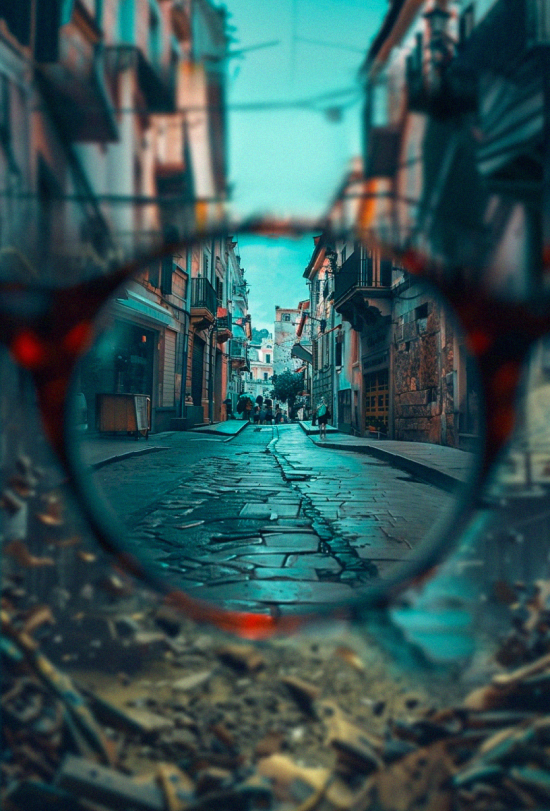

Humans are infinitely adaptive depending on context. Anthropology is a lens bringing focus and clarity to why, when, how and what humans do.
Designing the right context, one that fosters human virtues and leads to real social innovation is tricky precisely because we are often solving the wrong problem.
Only by applying anthropological theory and empirical research can design act as a true catalyst of social innovation. It can literally re-shape the world from materials, product–service systems to social organizations.
Demand by end-users, governmental policy and dwindling raw resources make a transition towards regenerative business models inevitable. The lens of anthropology can help your organization make that change.
Humans are infinitely adaptive depending on context. Anthropology is a lens bringing focus and clarity to why, when, how and what humans do.
Designing the right context, one that fosters human virtues and leads to real social innovation is tricky precisely because we are often solving the wrong problem.
Only by applying anthropological theory and empirical research can design act as a true catalyst of social innovation. It can literally re-shape the world from materials, product–service systems to social organizations.
Demand by end-users, governmental policy and dwindling raw resources make a transition towards regenerative business models inevitable. The lens of anthropology can help your organization make that change.

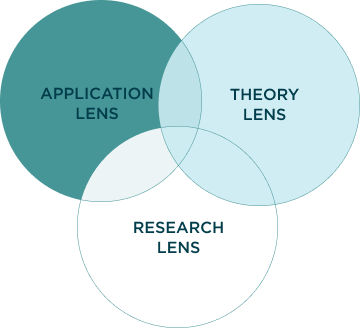
APPLICATION LENS
Broad, deep, and long-term understandings of people in their own environments lead to better solutions. Such solutions can be implemented through a process of co-working between anthropology and design
RESEARCH LENS
Anthropology, as a discipline with a holistic framework, can address complex interconnections of problems. Qualitative design research includes grounded theory, ethnography and cultural probes.

THEORY LENS
Human behaviour evolved as an adaptation to the physical and social environment of the distant past.
Since modern life is changing rapidly, traits that were once features are now bugs.
APPLICATION LENS
Broad, deep, and long-term understandings of people in their own environments lead to better solutions. Such solutions can be implemented through a process of co-working between anthropology and design
APPLICATION LENS
Anthropology, as a discipline with a holistic framework, can address complex interconnections of problems. Qualitative design research includes grounded theory, ethnography and cultural probes.
APPLICATION LENS
Human behaviour evolved as an adaptation to the physical and social environment of the distant past.
Since modern life is changing rapidly, traits that were once features are
now bugs.
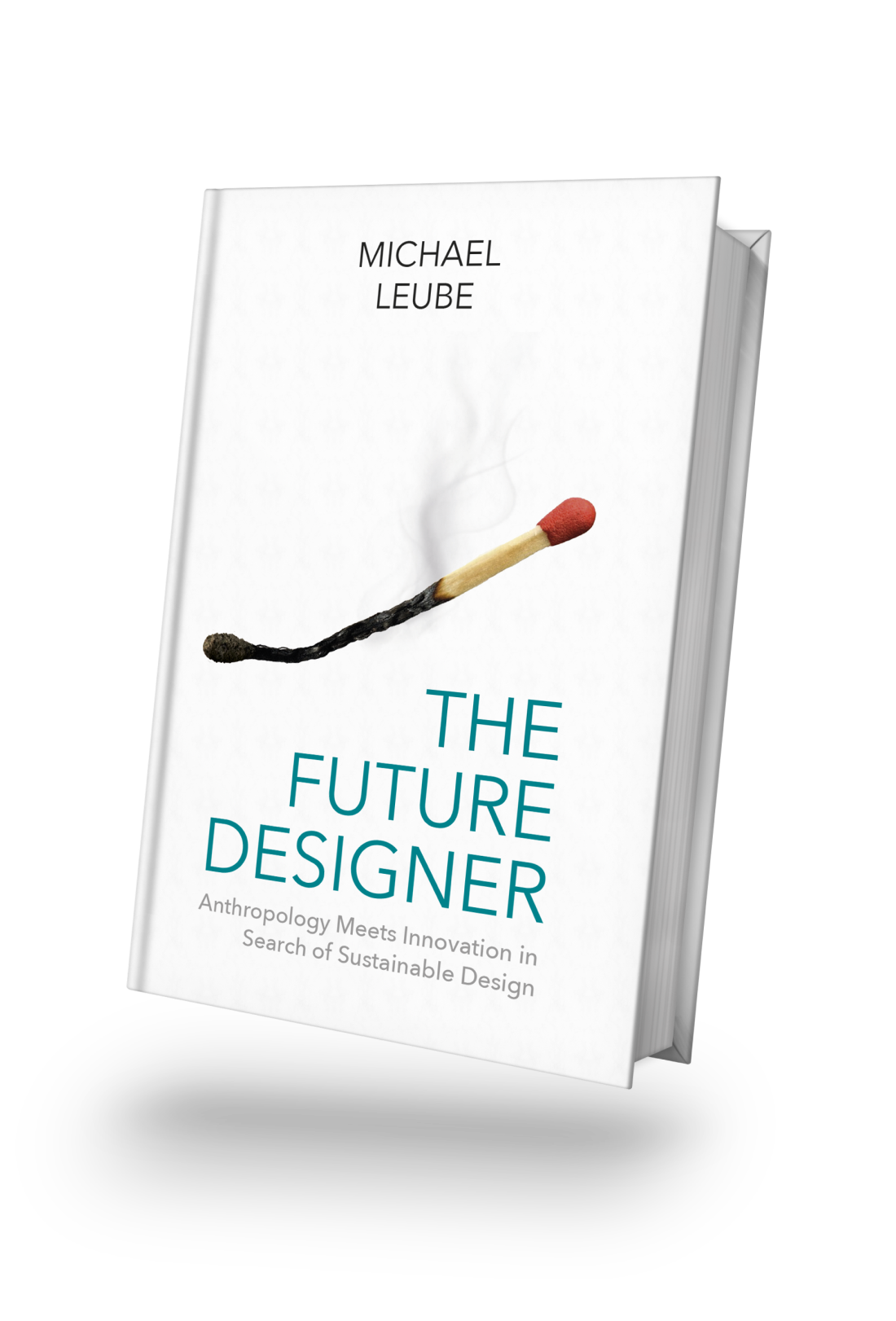
The future designer
Supported by a vast body of literature in evolutionary science and design research, the book presents a blueprint for fostering more sustainable patterns of production and consumption. This blueprint is grounded in human virtues rather than vices and proposes a new curriculum tailored towards prosociality and sustainability.
Leveraging his extensive professional background and expertise in the circular economy, Michael Leube offers practical examples, methods and tools for implementing sustainable approaches in the practical work of experienced designers. Showcasing cutting edge innovations for pro-social and humanitarian design, the book ultimately argues that if we change the objective of design from creating desire to creating value, we can solve many of the most pressing social problems, from the cooperation of citizens to sustainable cities.
The future designer