Michael Leube
Design Antrhopologist

I am interested in all things human. I was born in Austria and grew up in the San Francisco Bay Area. I am a design anthropologist specializing in business anthropology. My work focuses on understanding human behavior, culture, and decision-making in real-world contexts. I received a B.A. from the University of California, Berkeley (Anthropology and Comparative Religion) in 1994. After returning to Europe, I earned an M.A. from the University of Vienna in 1999 and a Ph.D. from the University of Zagreb in 2003. I am fluent in German, English, and Spanish.
Currently, I research and teach at the intersection of anthropology and design, with a focus on pro-sociality and sustainability. Through my work in business anthropology, I explore how evolutionary science and cultural insights can inform better design and business practices. Rather than relying on ideology, I aim to provide grounded, research-based perspectives. I have also trained as a facilitator in design thinking at Stanford’s d.school and in pro-social behavior programs, helping organizations create meaningful and lasting impact.
Michael Leube
Design Antrhopologist
I am interested in all things human. I was born in Austria but grew up in the San Francisco Bay Area. I received a B.A. from the University of California at Berkeley (Anthropology and Comparative Religion) in 1994. After returning to Europe, I received a M.A. from the University of Vienna (Anthropology and Human Biology) in 1999 and a Ph.D. from the University of Zagreb (Anthropology) in 2003. I am fluent in German, English and Spanish.
Currently, I research and teach on the interface between anthropology and design with a constant focus on pro-sociality and sustainability. By providing an expansive knowledge on evolutionary science and design research, rather than ideology, Leube can transform your business into an ambassador of a regenerative future. Through his training as facilitator in “design thinking” at Stanford’s d.school and “design for “pro-social behavior” at pro-social institute your business can make a real difference.

Michael Leube, Ph.D.
Design Anthropologist


University of California at Berkeley
B.A. Cultural Anthropology (Minor: Comparative Religious Studies)
1991-1994

University of California at Berkeley
M.A. Cultural Anthropology (Minor: Biological Anthropology)
1995-1999

University of Zagreb
Ph.D. Anthropology
Thesis: “Culture and Evolution: Comparison of British Social Anthropology, American Cultural Anthropology and Vienna’s Kulturkreislehre”.
1999-2003
Empathize and Prototype: A Hands On Dive into the Key Tools of Design Thinking
Stanford Innovation and Entrepreneurship Certificate

CircularX. Circular Economy-An Introduction
Delft University through edX

Sharing Cities: Governance and Urban Sustainability
Lund University through Cousera
Pro-social Facilitator
Pro-social Institute
CASE STUDIES
It is like a relay race. I provide theory and research on human conduct, designers find the best products, services and interfaces and end-users can make the most sustainable decisions. In a team we all contribute.
01.

PROBLEM
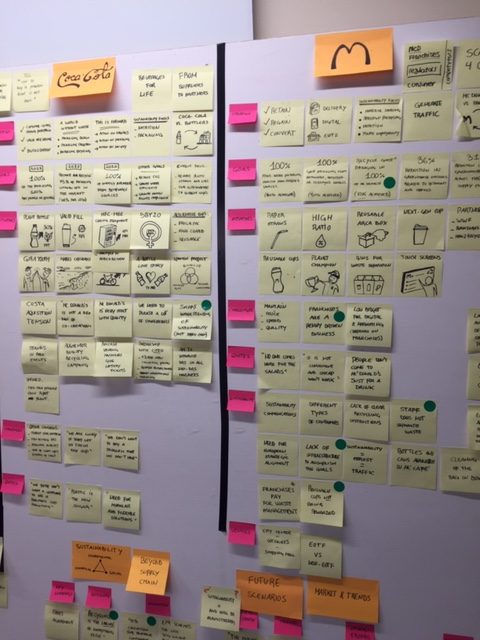
Finding a healthier and more sustainable way for clients of McDonalds to enjoy take-away drinks without using PE-coated, single-use cups and plastic straws, both of which are being outlawed.
SOLUTION
McDonalds/ Cocacola clients must be elevated to ambassadors of health and sustainability. A reusable, loyalty -based system will elevate the self esteem of consumers and help the planet.
ROLE
During the input, brainstorming and ideation phases, I addressed the archaic human custom of transporting food and drink and the addiction potential related to large amounts of sugar.

02.

PROBLEM
How do you attract the notoriously transient and free-thinking Millennials to buy insurance?
SOLUTION
Rather than conceiving insurance as springing from a worrying, pessimistic mindset, it must be positioned as an enabler of free and adventurous lifestyles in a rapidly changing world.
ROLE
The majority of my student body falls into this generation and thus, as a researcher I was able to comprise an extensive assessment.
03.

PROBLEM
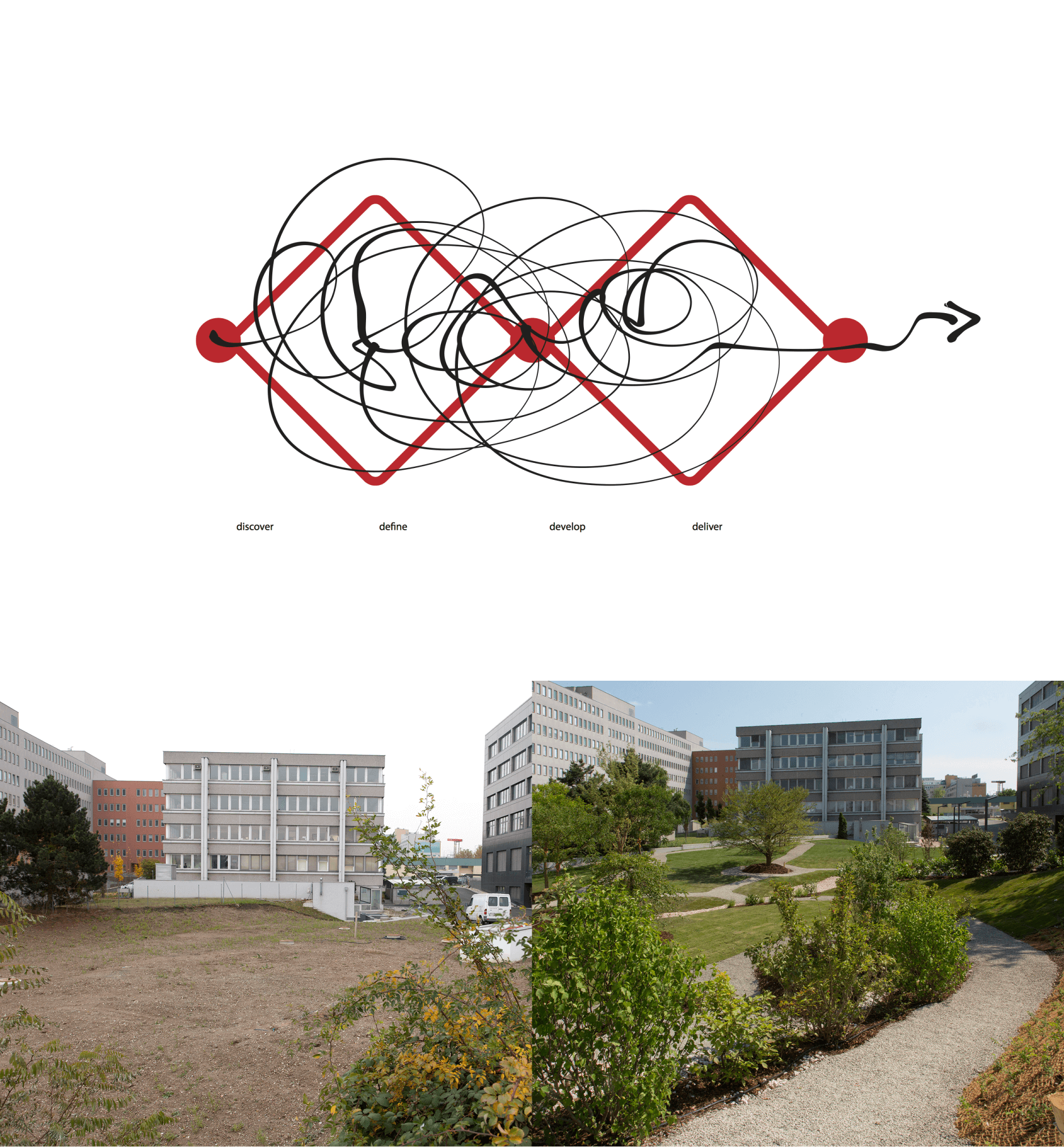
Turning an unattractive, unused park in Vienna into an enjoyable space for people to recharge in the middle of a city.
SOLUTION
As expressed by E.O. Wilson´s concept of biophilia, all humans have an innate sense of belonging to and longing for nature. Evolutionary psychology suggests that universally humans have a preference for the features of the African savannah, the place of origin of modern humans. Together with designer Rudolf Greger we completely overhauled the park.
ROLE
I provided the theoretical foundation from the anthropological sciences and acted as a sparring partner throughout the project.